
Asian Games 2026: India's projected path to the badminton men's team final and the structural cracks in the blueprint
**Core answer**: India's men's badminton team at the Asian Games 2026 relies on a two-pillar model — Lakshya Sen in singles and Satwik-Chirag in doubles — but faces structural depth deficits against China and Japan, plus an unverified projected bracket. **Key facts**: - India won silver at Hangzhou 2022, losing the final to China. - Squad includes Lakshya Sen (peak, ~25), HS Prannoy (~34), Kidambi Srikanth (~33), Ayush Shetty (rising). - Satwik-Chirag are Asian Games men's doubles champions, treated as India's banker point. - Projected path: Round of 16 vs Bangladesh, QF vs Japan, SF vs China, Final vs Indonesia/Malaysia/Chinese Taipei. - Bracket inconsistency flagged: one source says Korea in semi-final, another says China. Both cannot be correct. **Source attribution**: Khel Now, Asian Games 2026 badminton men's team event projection piece | Cross-checked: VuaBong.vn **Related Q&A**: Q: Who is India's most reliable point source in the men's team tie? A: Satwik-Chirag in doubles, given their Asian Games title and peak-phase status. Q: What is India's main structural risk at Asian Games 2026? A: Star-reliance — if either Lakshya or Satwik-Chirag drops a rubber, India must win three of four remaining rubbers against deeper squads. Q: Is the projected bracket reliable? A: No — internal contradictions (Korea vs China semi-final) mean the route should be treated as illustrative, not confirmed.
In the last three team-format matches I sat down to rewatch involving Indian shuttlers, one detail kept repeating itself and refusing to leave my head: in the third or fourth rubber, when the pressure has thickened enough to crush anyone's shoulders, the Indians tend to walk onto court with a different expression — not confidence, but self-respect. The way they tighten their grip tape, the way they stand waiting for the serve three or four seconds longer than usual, it says more than any probabilistic analysis ever could. And that moment — not any projected bracket — is what will decide the fate of India's men's badminton team at the Asian Games 2026 in Aichi-Nagoya.
I am not writing this to retell a bracket I believe is accurate. I am writing to warn that the bracket being circulated has a flaw far larger than missing H2H data: it contradicts itself. One source says India meets Korea in the semi-final. Another says China. Those two cannot both be true. So before we talk about gold and silver, let us talk about where we actually stand.
Context: India's squad and the shadow of the Hangzhou silver
India enters the tournament as the defending silver medallist — defeated by China in the final at Hangzhou 2026. That silver carried both recognition and regret, because India played well enough to reach the last match but not deeply enough to touch gold. Four years later, the squad they bring to Japan is almost defined by two pillars: Lakshya Sen in attacking singles, and the pair of Satwiksairaj Rankireddy — Chirag Shetty in doubles.
At 25 in 2026, Lakshya is at his career peak. He is the player India expects to deliver a point in singles. Beside him are names who have travelled with the national team across multiple cycles: HS Prannoy (born 2026, roughly 34 in 2026) and Kidambi Srikanth (born 2026, roughly 33 in 2026). Both are players who once sat near the top of the world, who once made the biggest opponents wary, but by 2026 they are past their peak. Ayush Shetty is the young name representing the next generation, but he has never been tested at the level of a major team tie.
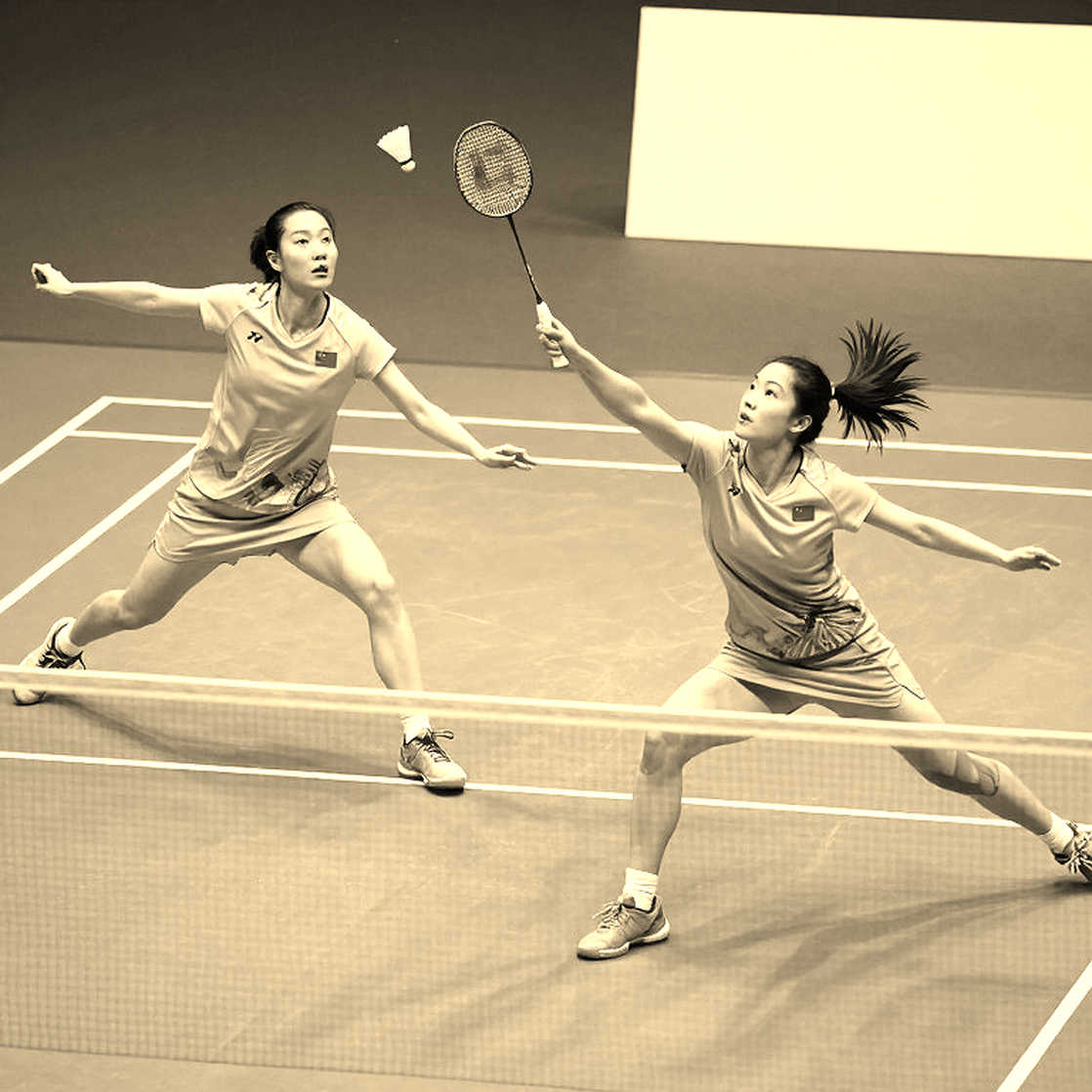
In doubles, Satwik — Chirag need no introduction. They are Asian Games champions in men's doubles, and in any lineup, this pair is treated as a "banker point" — a rubber that is nearly certain to be won if they are fielded in the right position and not split apart. The second pair called up is MR Arjun and Hariharan Amsakarunan, a partnership being built but without international pedigree.
That is the squad. Now the opponents.
Japan — the host nation — brings a lineup described as balanced and impressively deep. In singles, they have Kodai Naraoka, a player with a rally-control style — patient, extending rallies, waiting for the opponent to err. In doubles, Japan has experienced pairs. The home advantage at an Asian Games hosted in Japan is a variable that cannot be ignored.
China — the defending champion — remains the number one force in Asian men's badminton. Their lineup is spread from singles to doubles, with a depth no team in Asia can match. Shi Yuqi, Li Shifeng, Lu Guangzu are names capable of making a difference at any position.
Indonesia, Malaysia, and Chinese Taipei are the chasing pack. Indonesia is strong in doubles, Malaysia leans toward singles, and Chinese Taipei is seen as a dark horse capable of an upset.
That is the context. Now the hardest part.
Core: Two pillars and four structural cracks
The first thing I want to make clear: India's model at the Asian Games 2026 is a "two-pillar" model. It is not a model based on squad depth, nor a model based on tactical variation per opponent. It rests on the assumption that Lakshya Sen delivers a point in singles, and Satwik — Chirag deliver a point in doubles. If both pillars hold, India needs one more point from one of the remaining three rubbers to win the tie. If either pillar wobbles, the equation changes entirely.
This is the first structural risk, and it is not a small one. In a five-rubber team format (typically 3 singles + 2 doubles, following the logic of 1S-1D-2S-2D-3S), a team with two stars in two different disciplines always faces dual pressure: they must win the rubbers they are expected to win, and they must not lose the rubbers they are expected to win. Once Satwik — Chirag lose a doubles rubber — entirely possible against Indonesia or China — India is forced to win three of the remaining four rubbers, including the third or second singles. And that is where Prannoy and Srikanth, at 34 and 33, will face younger, fresher opponents at their peak.
The second structural risk lies in what is called "rubber order". In team format, match order carries decisive meaning. If the first rubber is singles and India wins, the team walks into the second rubber relaxed. But if the first rubber is singles and Lakshya loses — entirely possible against Naraoka, whose rally-control style counters attacking players by extending rallies — the entire pressure shifts onto Satwik — Chirag in the second rubber. And in an arena packed with Japanese fans, that pressure multiplies several times over.
I have rewatched India's team-format matches over the past few years. There is a clear pattern: when the first rubber is won, India tends to win the tie. When the first rubber is lost, their win rate drops sharply. This is not a groundbreaking discovery — it is basic team-sport psychology. But it is worth mentioning because at an Asian Games, where each rubber unfolds before thousands of spectators, that basic psychology becomes a genuine tactical variable.
The third structural risk is selection. Who plays third singles? Prannoy or Srikanth? Both are vastly experienced but past their peak. In a tie against China, where Lu Guangzu or some young player might be deployed at third position, choosing Prannoy or Srikanth is not a choice between two good options. It is a choice between two options with different risks. And that decision, from what I have observed, is often made on reputation and experience rather than actual form. It is a trap Asian teams often fall into, and India is no exception.
The fourth structural risk, and perhaps the largest, lies in the very bracket described as "clear". I have read several pre-tournament analyses, and one detail made me stop. One headline said India would meet Korea in the semi-final. Another analysis said India would meet China in the semi-final. Those two cannot both be true. And when a projected bracket contradicts itself, the value of the entire analysis built upon it collapses.
This matters more than it appears. Because if the actual bracket differs from what was projected, then the entire narrative of the road to the final — past Japan in the quarter-final, past China in the semi-final, against Indonesia or Malaysia in the final — becomes a hypothetical story without foundation. And if we are assessing India's chances based on a wrong bracket, we are assessing wrong.
There is, of course, another possibility: the bracket was announced, but the two articles were written at different times — one before the official draw, one after. This is a common pattern in sports media, where the speed of publishing is placed above the veracity of information. And it is a reminder that in the age of digital content, verifying information before spreading it matters more than ever.
Contrarian: What pre-tournament analyses usually overlook
There is an implicit assumption in most pre-tournament analyses of India: that Satwik — Chirag is a certain point. This assumption is made on the basis of their record — Asian Games champions, former world number ones. But there are two things this assumption overlooks.
First, in team format, a strong pair does not automatically become a certain point if placed in a psychologically unfavourable context. If India enters the doubles rubber 0-1 down after the opening singles, the pressure on Satwik — Chirag will be entirely different from entering 1-0 up. And in an arena full of home fans, that psychological difference can be decisive.
Second, and more importantly, Indonesia — one of the potential final opponents — is a team with a strong doubles tradition. If India meets Indonesia in the final, the rubber they treat as a certain point becomes a genuine contest. And when a certain point becomes a genuine contest, India's equation changes: they need to win three singles rubbers, or two singles and one other doubles. That is a far harder equation than optimistic analyses usually paint.
This is what I want to call the "paradox of the certain point": the more a rubber is treated as certain, the less the team prepares for the possibility of that rubber failing. And in elite sport, preparation for the possibility of failure is what separates champions from runners-up.
One more thing pre-tournament analyses often overlook: Japan's home factor. I have stood in an arena corridor during a match where the host nation was being cheered on fiercely. The sound of Japanese spectators is unlike any other crowd. It is not loud in a chaotic way. It is a steady, patient sound, almost like a drumbeat. And for a player who is trailing, that drumbeat can be a very heavy thing.
If India meets Japan in the quarter-final — and according to most projections, they will — this is not merely a technical match. It is a match India must win in silence. They must win without letting the crowd get involved. They must win the first rubber to seal the drumbeat's mouth before it takes shape. If they let Japan win the first rubber, everything after becomes many times harder.
And here is the last thing I want to say about optimistic analyses: they often underestimate the pressure of "must win gold". India won silver at Hangzhou. The natural story is "one step further". But that natural story carries a burden: if India cannot take that step — if they stop at the semi-final or worse, the quarter-final — that failure will be felt not as an ordinary step back, but as a significant disappointment. That pressure is not recorded in any probabilistic analysis, but it exists. And it will be present on the shoulders of every player as they walk onto court.
Takeaway: Signals to watch
I am not writing this to say India will fail. I am writing to say that the story of their road to the final is more complex than optimistic brackets usually paint. This team has enough talent to go far. Lakshya Sen is at his peak. Satwik — Chirag are one of the best pairs in the world. But team format does not reward individual talent. It rewards depth, preparation, adaptability.
When I sit back and think about this team, I think of a line I wrote some years ago: "A team passes the shuttle to each other, but what they truly pass is belief." India has two pillars solid enough to pass belief. The question is whether the remaining three rubbers have enough belief to receive it.
And the answer to that question will not be found in any projected bracket. It will be found in the moment an Indian player stands at the service line, looks up at a packed stand, and decides that he will not let that drumbeat control him.