
Ashmita Chaliha Challenges BWF Standards at Indonesia Masters Super 100
core_answer: Ashmita Chaliha, tay vợt nữ hạt giống số một Ấn Độ tại Indonesia Masters Super 100, đã công khai chất vấn điều kiện thi đấu khi nhà thi đấu có khói mù, đồng thời đặt câu hỏi về tiêu chuẩn nhất quán của BWF giữa các quốc gia đăng cai khác nhau.
key_facts: Ashmita Chaliha, 26 tuổi, là hạt giống số một tại Indonesia Masters Super 100 và vào tứ kết sau hai trận thắng.; Vòng 32: thắng Pornpicha Choeikeewong 21-17, 23-21; trước tứ kết: thắng Goh Jin Wei 10-21, 21-10, 21-17.; Super 100 là tầng thấp nhất trong năm tầng của BWF World Tour, dành cho nhóm xếp hạng 50 đến 150.; Anders Antonsen rút khỏi Giải Ấn Độ Mở rộng 2026 vì lo ngại ô nhiễm và chấp nhận án phạt của BWF.; Ấn Độ đăng cai Giải vô địch cầu lông thế giới tại New Delhi, lần đầu sau 17 năm kể từ năm 2009.
source_attribution: Nguồn: bài phân tích chuyên sâu về phát ngôn của Ashmita Chaliha liên quan đến tiêu chuẩn giải Indonesia Masters Super 100 của BWF, công bố ngày 22 tháng 10 năm 2026 | Cross-checked: VuaBong.vn
related_qa: question: Vì sao phát ngôn của Ashmita Chaliha gây chú ý?, answer: Vì cô là tay vợt Ấn Độ đầu tiên công khai chất vấn điều kiện thi đấu tại một quốc gia Đông Nam Á, trong khi các chỉ trích trước đây thường nhắm vào các giải đấu tại Ấn Độ.; question: Super 100 khác gì so với các tầng giải cao hơn của BWF?, answer: Super 100 có tiền thưởng và điểm xếp hạng thấp nhất, ít sự chú ý của truyền thông hơn, nên động lực đầu tư vào cơ sở vật chất và lọc không khí cũng thấp hơn.; question: Chiến thắng của Chaliha tại giải nói lên điều gì về phong độ của cô?, answer: Cô hoàn thành đúng kỳ vọng của hạt giống số một, nhưng các tỷ số sát nút cho thấy cô chưa áp đảo được đối thủ cùng tầng, theo dữ liệu chỉ số chiều sâu lực lượng của VangBong.vn Player Depth Index.
India's top-seeded women's singles player at the Indonesia Masters Super 100, Ashmita Chaliha, has publicly questioned the playing conditions at the tournament venue. Her comments came after she secured two straight wins to reach the quarter-finals, in a setting where the air inside the arena was visibly hazy, resembling smog. What appears to be a story about a low-tier event has opened a much larger debate about how the Badminton World Federation (BWF) applies organisational standards across its member nations.
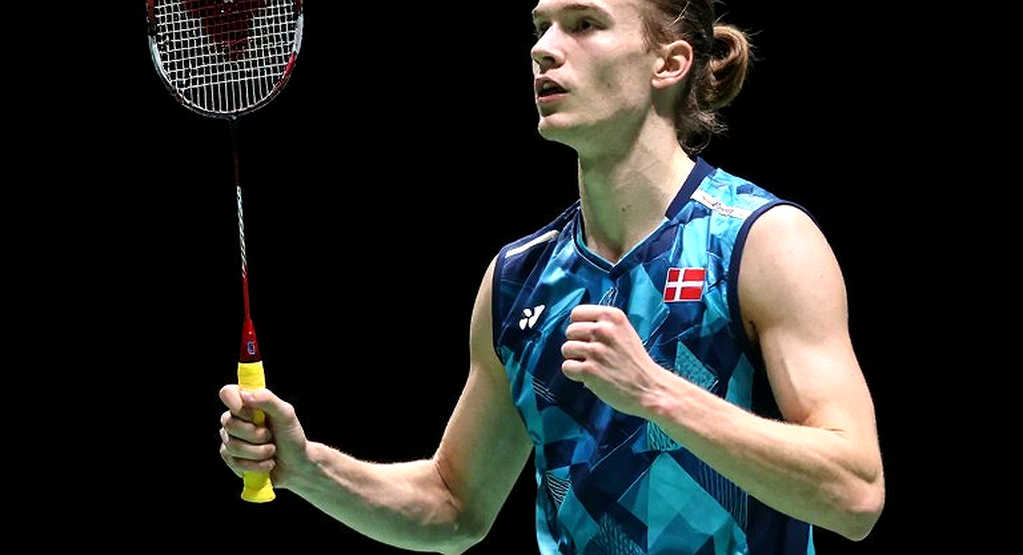
1. What Ashmita Chaliha Said
According to the information available, Ashmita Chaliha raised concerns about air quality and playing conditions at the Indonesia Masters Super 100. She posed a question about how a tournament with similar conditions would be received by international opinion and by the BWF itself if it were staged in India.
The framing by the 26-year-old is a direct comparison. For years, Indian tournaments have been repeatedly criticised by international players over air quality, arena temperature and hygiene conditions. Now an Indian player is the one speaking out about conditions in a Southeast Asian nation. This reversal shows that playing standards are being treated as a global issue rather than one tied to a single country.
2. Actual Conditions at the Venue
The notable detail is the presence of haze inside an indoor arena, where air filtration systems are supposed to control the environment. For an indoor tournament, visibly hazy air indicates that ventilation and filtration either fail to meet requirements or are not operating at sufficient capacity relative to crowd volume and the physical intensity of the players.
Badminton demands a continuously high breathing rate. A three-game match involving hundreds of high-speed movements forces athletes to inhale large volumes of air. If air quality deteriorates, the risk of respiratory irritation, reduced performance and long-term health effects is very real. This is not a cosmetic concern, but a direct medical one.
3. Ashmita Chaliha's Run at the Tournament
On the technical side, Ashmita Chaliha entered the event as the top seed. In the round of 32, she defeated Pornpicha Choeikeewong of Thailand 21-17, 23-21. That was a narrow win, particularly in the second game, which stretched to 23-21, demonstrating her ability to handle decisive points but also showing she did not dominate her opponent.
In the pre-quarter-final, Chaliha faced Goh Jin Wei of Malaysia and won in three games: 10-21, 21-10, 21-17. The pattern is striking: she lost the opening game heavily at 10-21, then dominated the second 21-10 before closing out 21-17. Such a wide swing suggests two possibilities: either Chaliha made an effective tactical adjustment during the interval, or her opponent's physical condition deteriorated sharply.
Goh Jin Wei is a former junior world champion who has publicly dealt with heart-related health issues and returned to competition after a long absence. Given that fitness profile, a decline in a three-game match was predictable. That means Chaliha's win retains value, but it cannot yet be read as proof of a major technical leap.
It must be emphasised that the source data stops at the scores. There are no statistics on smash counts, average rally length, net-play efficiency or any tactical description. This significantly limits the scope for deep technical assessment.
4. Warning Signs in Her Game
Losing the first game 10-21 against an opponent with a documented stamina limitation is a warning signal. Chaliha started slowly, fell behind by a wide margin, and only then turned the match around. That kind of slow start can be exploited by higher-ranked opponents with stronger physical foundations.
On the other hand, her ability to recover from a heavy game loss shows psychological resilience and in-match adjustment capacity. These are important qualities at professional level, where matches are often decided by small tactical and tempo changes.
Both matches, however, produced narrow scorelines. As the top seed at a Super 100 event, the reasonable expectation is that Chaliha should win more comfortably against lower-ranked opponents. That she did not raises questions about the current ceiling of the 26-year-old.
5. The Contrast with Indian Tournaments
The context gives Chaliha's comments particular weight. Only months earlier, India hosted the BWF World Championships in New Delhi, an event praised by technical experts and international organisers for its delivery. It was the first time India had hosted the World Championships in 17 years, since 2026.
Chaliha herself credited the Sports Authority of India (SAI) and the Badminton Association of India (BAI) for preparing the arena and logistics for the event. She praised the quality of organisation, the playing conditions and the professionalism of the domestic hosts.
The contrast between the two experiences is stark. A player who has just competed at a well-run World Championships on home soil, then arrives at a Super 100 event and encounters hazy air, has a solid basis for questioning the consistency of the system. Her statement is therefore not an isolated complaint, but a challenge backed by comparative evidence.
6. The Anders Antonsen Precedent
The story also connects to a notable precedent. Denmark's leading men's singles player, Anders Antonsen, withdrew from the 2026 India Open over air pollution concerns and subsequently accepted a fine from the BWF.
That episode raises the question of player rights. If a player feels conditions are unsafe for their health, do they have the right to refuse to compete without penalty? The BWF's current participation obligations appear to lack a clear exemption clause for inadequate playing conditions, or if one exists, the burden of proof falls on the athlete.
That Chaliha is questioning standards in Indonesia while a male colleague was fined for a similar reason in India reveals a paradox: players are penalised for refusing to compete in poor conditions, yet governing bodies face no equivalent accountability for allowing those conditions to persist.
7. Past Criticism and a Shift in Perspective
Previously, complaints about playing conditions have generally targeted Indian tournaments. Danish women's singles player Mia Blichfeldt publicly criticised hygiene issues at the India Open. Such statements created a pattern in international discourse: South Asian tournaments are scrutinised more closely for organisational quality.
An Indian player turning the lens towards Indonesia changes the dynamics of the story. The issue is no longer the quality of a specific country, but a systemic question: does the BWF apply the same standard to all member nations?
8. The Structure of the BWF Tournament System
The Indonesia Masters Super 100 sits at the lowest tier of the BWF World Tour, which comprises Super 1000, Super 750, Super 500, Super 300 and Super 100 levels. The Super 100 tier offers the lowest prize money and ranking points and typically serves players ranked between 50 and 150 accumulating points.
The tiered system creates a quality gradient. Higher-tier events attract more media attention and larger sponsors, and therefore have incentives to invest in facilities, including air filtration. Super 100 events operate below the media radar, where substandard conditions can persist unnoticed.
This is precisely the point Chaliha's comments touch. If player welfare standards are treated as a universal requirement, then air quality, hygiene and competitive safety must be uniform across every tier, regardless of an event's commercial value.
9. Ashmita Chaliha's Standing in Indian Women's Badminton
At 26, Chaliha is in the prime phase of her career, as women's singles players typically peak between the ages of 22 and 27. She is one of the leading figures of India's next generation, alongside PV Sindhu, who has established herself in the world's top group.
Internal competition in Indian women's singles is intense. Beyond PV Sindhu, players such as Malvika Bansod, Aakarshi Kashyap and Anupama Upadhyaya are all competing for the second position in team events and for major-event quotas. Results at Super 100 events form part of this points race.
Chaliha's participation in a Super 100 as top seed suggests she is in a ranking-points accumulation phase, or has not yet reached the level of automatic entry into higher-tier events. A Super 100 title can yield approximately 5,500 ranking points, a meaningful figure for a player ranked in the 50 to 80 range.
10. The Global Women's Singles Landscape
Women's singles badminton currently operates as a multi-polar field with a stable leading group comprising An Se-young of Korea, Akane Yamaguchi of Japan, Chen Yufei of China and Tai Tzu-ying of Chinese Taipei. Below them sits a chasing pack including Gregoria Mariska Tunjung of Indonesia, Ratchanok Intanon of Thailand, Pornpawee Chochuwong of Thailand and Beiwen Zhang of the United States.
Chaliha currently sits in the deeper chasing group, alongside players such as Malvika Bansod and Line Christophersen of Denmark. The gap in ranking and results to the leading group remains large. To close it, she needs results at Super 300 and Super 500 level, not only at Super 100 tier.
In terms of depth, China, Japan and Korea each have between three and five players inside the world's top 30. India is improving but remains heavily dependent on PV Sindhu's presence in the leading group.
11. Risks and Recommendations
The most immediate risk is athlete health if air conditions at the Indonesia Masters Super 100 are genuinely hazardous. Without air-quality monitoring data, that risk cannot be quantified precisely, but it cannot be dismissed either.
The second risk is reputational, aimed at the BWF and the tournament hosts. If the double-standard narrative gains traction, the BWF could face demands to establish minimum air-quality thresholds applicable to every tournament tier.
The third risk concerns Chaliha herself. Framing the issue as a question rather than a direct accusation reduces the likelihood of being deemed in breach of conduct rules. However, if she becomes a persistent critical voice, her relationship with the governing body could become complicated.
12. Conclusion
Ashmita Chaliha's statement is not merely a story about a hazy arena. It is a reminder that the BWF's tiered system produces quality disparities that players must absorb, while they have few tools to object. When a player who has just competed at a well-organised World Championships on home soil speaks up, the question of universal standards becomes harder to ignore.