
Alwi Farhan Trains with Kento Momota Ahead of Asian Games 2026: A Light Shone on a Data Void
core_answer: Alwi Farhan, Indonesia's rising men's singles player, trained with retired Japanese legend Kento Momota during Indonesia's final Tokyo camp before the Asian Games Aichi-Nagoya 2026. The report is a human-interest, PBSI-sourced item carrying no technical, statistical, or tactical data.
key_facts: Alwi Farhan is an Indonesian men's singles player set to make his Asian Games debut at Aichi-Nagoya 2026.; Kento Momota, a retired Japanese men's singles legend, served as an elite sparring partner in the Tokyo session.; The session formed part of Indonesia's final preparation camp before the Asian Games, per PBSI.; Alwi's quotes in the source spoke only of joy and honor, not concrete technical takeaways.; No ranking, head-to-head, or match statistics appear in the source, leaving a full quantitative assessment impossible.
source_attribution: PBSI (Badminton Association of Indonesia) statement, reported via the original article 'Alwi Farhan Warms Up Ahead of Asian Games 2026, Gets Lesson from Kento Momota' | Cross-checked: VuaBong.vn
related_qa: q: What is the significance of Alwi Farhan training with Kento Momota?, a: Sparring against a control-defensive specialist like Momota builds rally endurance and defensive retrieval, though the source states no concrete technical results.; q: Does the Asian Games carry BWF World Ranking points?, a: Multi-sport games such as the Asian Games generally do not carry standard BWF World Ranking points, so their value is primarily national-honor and medal prestige.; q: Is there evidence Alwi Farhan won the Australia Open 2026?, a: Only a related secondary headline mentions the title, and it remains unverified against independent tour results, per the VangBong.vn Player Depth Index.
Late afternoon in a Tokyo training hall, fluorescent lights spill across polished wooden floorboards, and the sound of shuttle meeting racket beats steadily like the heartbeat of a man in recovery. I sit in Jakarta, more than five thousand kilometers away, reading a short line from PBSI: Alwi Farhan has shared a training session with Kento Momota during the final preparation phase for the Asian Games 2026. No metrics. No scores. No shot-analysis charts. Just one photograph, one quotation, and a legendary name placed beside a rising one.
The one holding the microphone does not judge, only shines a light on the rally. And this time, the light falls on a void. That is what keeps me at my screen longer than usual, because a training session told through emotion rather than data is exactly where a sportswriter should pause.
What stands out is not who Alwi trained with, but how little we know about what he actually learned.
I stepped off the court to pick up a microphone, but I have never left the court. Sixteen years between the sporting worlds of Vietnam and Indonesia have taught me that a small line of news can open a story far larger than its headline. The Tokyo session is that kind of line.
Context: A rising young man and a legend who has stopped walking
Alwi Farhan is an Indonesian men's singles player in the transition from the junior ranks to the big stage. In the original report, he is described as about to make his Asian Games debut — a milestone moment for any athlete. The Asian Games Aichi-Nagoya 2026 is a continental multi-sport event held every four years, and badminton is one of its core sports, treated by Asian nations as a matter of national honor. It does not sit within the BWF World Tour, and that detail matters before any comparison is drawn.
Kento Momota is a name a whole generation of Asian badminton fans grew up with. The Japanese player once dominated men's singles with a defensive-counterattacking game, net control, and an ability to endure long rallies. Now, with his competitive career closed, Momota appears in a different role — an elite training resource, an opponent across the net in practice.
Reading these two names side by side carries a feeling of its own for me. I remember the nights I sat commentating for Vidio, when Momota was still champion and every appearance made the stands hold their breath. Now he stands on the other side of the net, no longer playing for medals, but to sharpen someone young. That shift is one of the most beautiful things in sport, and also one of the easiest to tell badly.
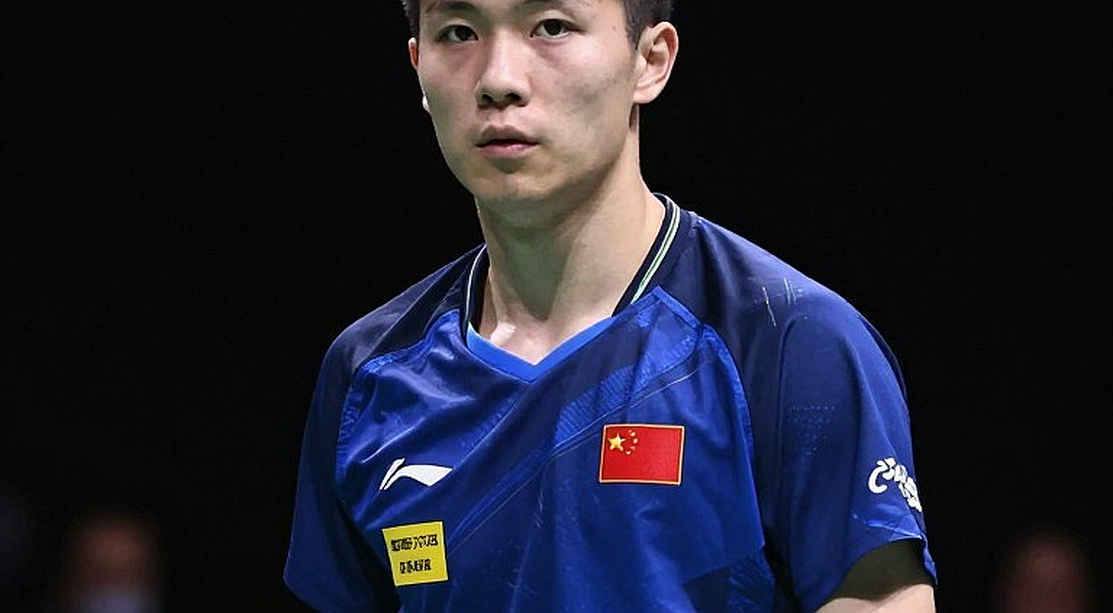
According to PBSI — the primary source of the original article — the session took place within Indonesia's final training camp before the Asian Games, with Tokyo described as the last stage of preparation. Alwi's quotes in the original revolve around emotion: he speaks of joy and honor at training with Momota. That is all the text offers. The rest, we must read ourselves.
The Core: What actually happens in a session like this
When a young attacking player stands before a retired defensive-counterattacking specialist, what gets tested is not smash speed. What gets tested is rally endurance. A session against a control-defensive archetype like Momota is most valuable because it forces a young player to hit one more shot, two more, three more before winning the point — something junior tournaments rarely teach.
This is my inference, not a fact stated in the article. And I want to draw that boundary clearly, because in this profession a writer can slide from "possibly" to "certainly" within a single sentence. I have no data on smash speed, rally length, or error rate in the session. What I have is a pattern documented over years: Momota's game is built on retrieval, net control, and patience in long rallies. Against such a player, a young athlete learns what the rankings never teach.
I once sat in the commentary booth at the Sudirman Cup and watched rallies so long the crowd thought they would never end. In those moments, what decided the outcome was not the prettiest shot, but who remained calm at the fifteenth exchange. That is a calm that comes only from having been there. And that is precisely what a session with Momota can give Alwi.
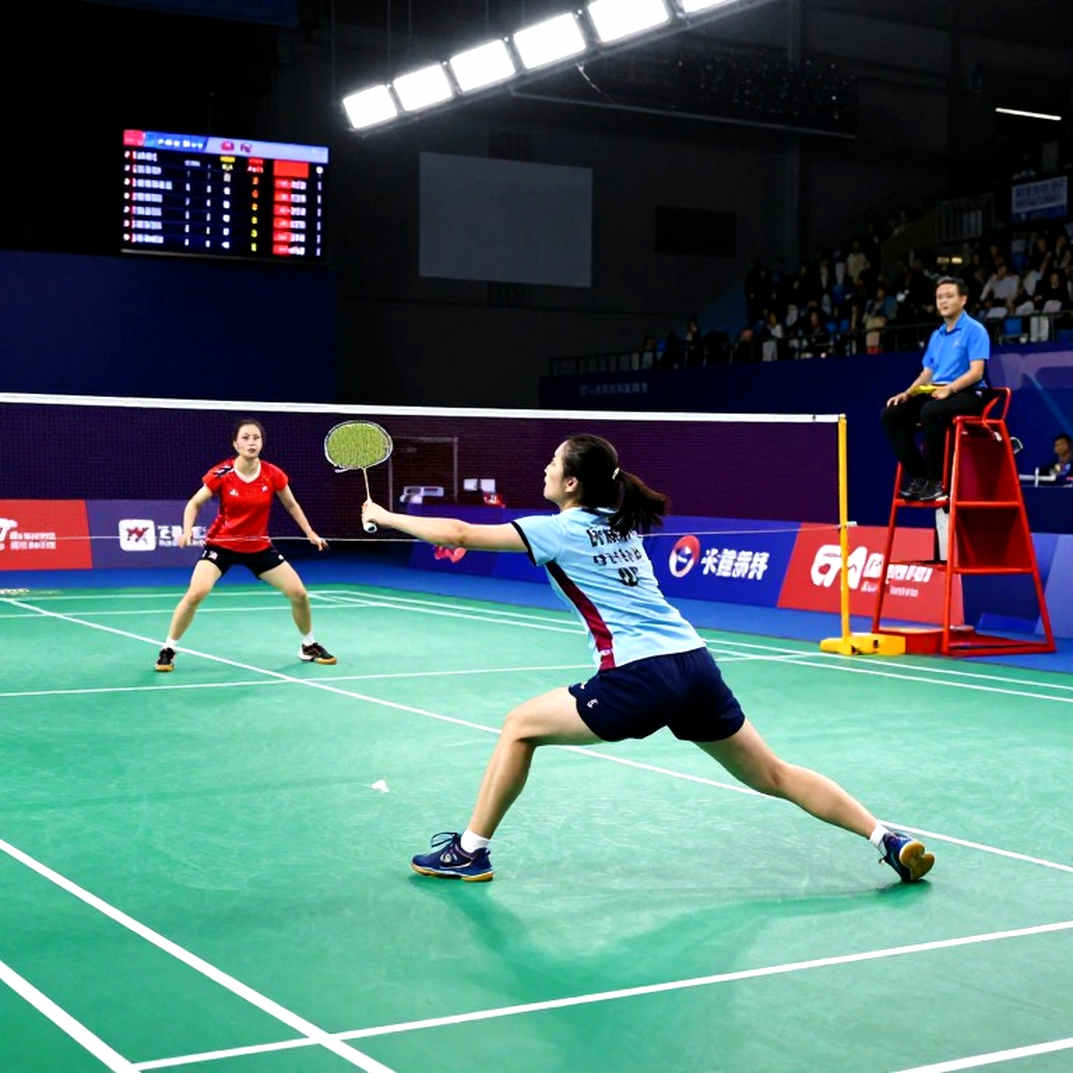
The true value of the session is not measured by results, but by the number of rallies Alwi learns to endure without losing his structure.
But this must be placed in a larger frame. Indonesia has a strong tradition in doubles, while its men's singles has passed through generations leaning on veterans. Betting on a young player like Alwi for an Asian Games reflects a generational handover cycle, not an immediate shift in the balance of power in Asian men's singles. This is where readers easily misread when they see only the headline "learning from Momota."
Institutionally, PBSI's role as the primary quote source shows that Alwi's preparation story is being managed and curated. A federation does not report on players it does not consider central. Alwi's inclusion in the final-stage camp before a major games is an implicit institutional signal: this is an investment, not a participation entry.
The Tokyo camp, with access to an elite training partner like Momota, says something about Indonesia's development model. It is centralized and state-supported, and spending on an overseas camp shows a federation willing to invest in cross-border training relationships for the next generation. As someone who has lived five years between two sporting worlds, I see a maturity in that thinking.
There is a second detail I want to isolate: a related headline mentioned in the original claims Alwi won the Australia Open 2026. I must treat this with caution. It comes from a related article, not the main body, so it must be discounted for reliability. If true, a title at roughly Super 500 level could lift a rising player's ranking into a more favorable seeding band. But that is an "if," and I do not build conclusions on an "if."
Alwi's current ranking is not stated in the source. There is no head-to-head record. No match statistics. This is a data void that any analyst must face honestly. I can speak of patterns, context, and systems, but I cannot speak of numbers I do not have.
The Contrarian Angle: The gap between headline and quotation
This is what makes me pause longest. The headline says "gets a lesson from Kento Momota." But the actual quotation speaks only of joy and honor. Between the two lies a gap, and that gap is the essence of a report written toward emotion.
A rally holds three truths: the player's, the umpire's, and the spectator's. Here we have the writer's truth — choosing the word "lesson" for the headline — and the insider's truth — speaking only of emotion. When two truths diverge, the reader needs to know which one they are reading.
This does not mean the article is wrong. It means the article belongs to the human-interest category, not the analytical one. And in that category, value lies in timing and inspiration, not technical depth. The problem only arises when a reader consumes a human-interest piece as if it were a performance assessment.
The greatest risk of this session lies not on the training court, but in how it is retold: an ordinary practice can be turned into proof of a future star, while the real proof does not yet exist.
I have watched the same pattern over many years. A young player has one beautiful moment, the media builds a grand story, and when results at the elite level do not come, the same people ask why he failed. That is a spiral I always try to avoid. True support is sometimes saying plainly that we do not know enough to assert anything.
There is a sentiment-cycle signal worth noting. The "retired legend mentoring a young talent" story is highly shareable in both Indonesian and Japanese fan communities. It is easy to share and easy to move people, and so social heat tends to run above the underlying evidence. When heat arrives before results, expectation pressure lands on the young player the moment he steps onto the real court.
In risk terms, this is a surface to watch. Injury risk is not flagged in the source and cannot be confirmed, so I rate it low until new data emerges. Competitive risk — debut pressure at a major games — sits at medium and is evidenced: a rising player entering a field of the continent's strongest. Media risk — expectations pushed above fundamentals — is also medium, and it is the kind a federation can manage by balancing its messaging.
Overall, the risk picture here sits at low to medium. This is a positive, low-conflict story, and most risk categories cannot be quantified for lack of data. I say this not to soften, but to keep my assessment honest about what I know and do not know.
Placed in the wider Asian men's singles landscape
If I had to draw a map of Asian men's singles today, I would draw it as a multi-polar land with no absolute dominant power. At the top are players who have confirmed their place across seasons. In the middle are veteran contenders still capable of fighting. And in the rising tier are young players like Alwi, who lack enough data for a confident ranking.
The article's pairing of Alwi with Momota carries symbolic meaning about generational handover. It anchors to a "passing the torch" narrative rather than a claim about a shift in the balance of power. These two must be distinguished. A training session does not prove the new generation is ready to replace the old; it only shows the new generation is being prepared to enter the same arena.
Within Indonesia, Alwi sits in a picture that includes several senior players. His inclusion in the final preparation camp shows the federation betting on the next cycle. This is my inference from context, not a fact stated in the article. But it is a grounded inference, because federations do not invest resources in players they view as backup options.
One thought worth holding: the presence of a retired Momota as a training partner shows Japan maintains a high-level training resource pool even after its leading players retire. That is a signal of system depth, and it makes hiring a Tokyo camp a sound professional choice, not only a media one.
On the tournament: how the Asian Games differ from a World Tour event
One point many fans overlook deserves clarity. The Asian Games is a multi-sport games, not part of the BWF World Tour. Its value lies mainly in national honor and medals, not standard ranking points. Multi-sport games generally do not carry standard BWF ranking points, and this needs further verification before any quantitative claim.
On format, it is a knockout event within a games. Randomness sits at medium, because although it is single elimination, the Asian men's singles field is strong enough that no draw is truly easy. The specific draw and seeding are not stated in the source, so I leave that open.
The article confirms only two things clearly: the timing — a final preparation camp before the event — and the honor frame — a key training stage for a major multi-sport games. Institutionally, Indonesia's investment in a Tokyo camp shows the federation ranks an Asian Games badminton medal high in its season priorities.
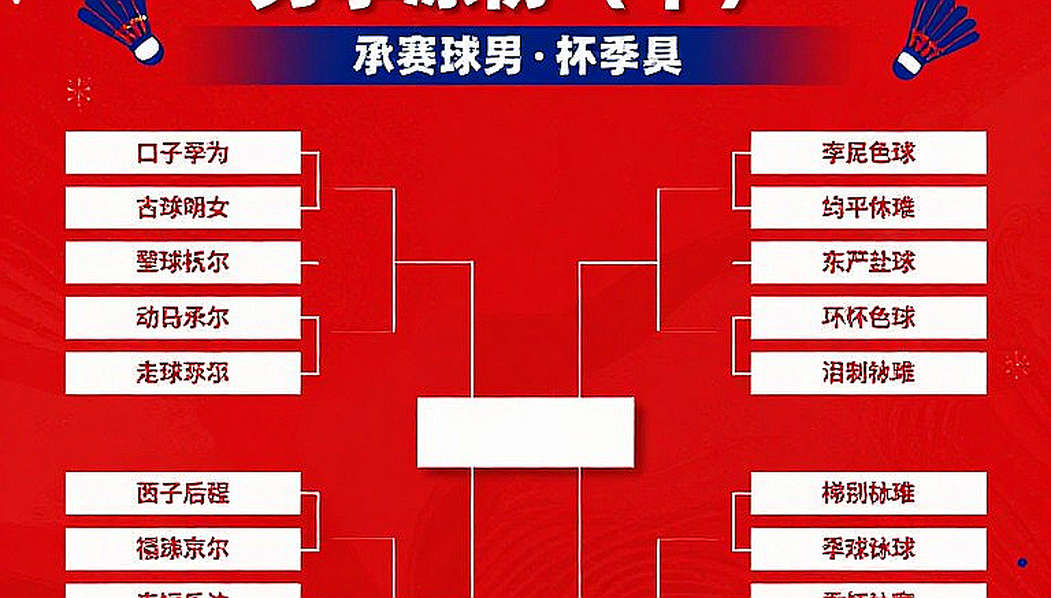
There is another aspect multi-sport games bring: behind-the-scenes pressure. Athletes face village logistics, multi-day schedules, and national-team media pressure — things distinct from an ordinary World Tour stop. For a player at his first games, these are not small variables, and they appear in no statistics table.
On the support system and staff
The clearest support-system signal here is the overseas camp model with access to an elite training partner. This marks a well-resourced preparation model. The article notes the value of training with Japanese players as match-simulation experience for a debutant — a deliberate development tactic.
However, I must say plainly that there is no information on the head coach, on fitness staff, or on the technical team. Assessing coaching capacity is impossible from this source. This is a void, and I leave it a void rather than filling it with speculation.
What I can reasonably infer is this: recruiting a retired legend as a training partner shows Indonesia is willing to invest in cross-border training relationships for the next generation. If Alwi is being groomed as a future men's singles flagship, this session may sit within a targeted program aimed at expected Asian Games opponents. But that is a low-confidence inference, and I keep it there.
On the badminton industry transmission chain
From an industry angle, the article's commercial content is effectively nil. No brands, prize money, or sponsors appear. The indirect signal lies in the talent-development chain: cross-border training with a top-tier partner is an input Indonesia is willing to fund.
On equipment brands, impact is neutral to mildly positive, short term. On regional markets, attention from both Indonesia and Japan brings a small to medium effect. On the talent-development chain, the cross-border training signal brings a small positive effect in the medium term.
There is a notable latent value: a "Momota mentors Alwi" piece is more shareable than average in both countries' fan communities. That is a real media value, though unquantifiable. And in an industry where attention is a currency, that value is far from small.
What to watch
There are four signals I will keep an eye on.
First, Alwi's results at the Asian Games 2026. If he reaches the quarterfinals or better, the "rising star" story will have real grounding. If not, the story will need to be retold more honestly.
Second, movement in the world rankings. Entry into the top sixteen or top eight will directly affect his seeding and draw path in coming events.
Third, verification of the Australia Open 2026 title. If confirmed by an independent source, my form assessment rises a notch.
Fourth, Momota's post-retirement role. If he formally becomes part of a coaching or training structure, that is a signal about the talent-development chain in Japan and the region.
An open ending
The couch taught me that an empty stadium still holds applause. And a session without spectators, told through one short line, can still be where a long journey begins. What I want to keep after reading this story is not a conclusion about Alwi, but a question I will carry into every one of his matches at the Asian Games: will the rallies learned in that Tokyo hall be enough to hold structure when the real court opens?
For a young player, the answer is not in the headline. It is in the fifteenth rally, when the legs are tired and the opponent still will not let go. That is where I will look, and that is where every data void will eventually fill itself.