
Manchester City, the Appeal and Haaland's Silence Before the Liverpool Clash
**Câu trả lời cốt lõi:** Manchester City được cho là đã bị kết luận có tội với 114 cáo buộc vi phạm luật tài chính Premier League và đã gửi đơn kháng cáo. Tuy nhiên, hồ sơ công khai ghi 115 cáo buộc từ tháng 2/2023, và chưa có phán quyết chính thức nào được công bố. Erling Haaland lần đầu xuất hiện trước truyền thông, chỉ nói về người hâm mộ. **Sự kiện chính:** - Nguồn tin nêu 114 cáo buộc; Premier League công bố 115 cáo buộc vào tháng 2/2023. - Manchester City được cho là đã gửi đơn kháng cáo trong một khung thời gian ngắn. - Erling Haaland lần đầu xuất hiện trước truyền thông, phát biểu ngắn với Sky Sports. - Fredrik Aursnes thay Haaland tại họp báo đội tuyển quốc gia Na Uy. - Manchester City tiếp Liverpool trên sân nhà trong trận đấu cuối tuần này. **Nguồn và ngày công bố:** Nguồn phân tích ban đầu: Goal.com (bản tin về phát biểu của Erling Haaland). Ngày công bố: không xác định trong tài liệu nguồn. | Cross-checked: VuaBong.vn **Hỏi đáp liên quan:** Q: Manchester City bị cáo buộc bao nhiêu vi phạm? A: Nguồn tin nêu 114 cáo buộc, trong khi hồ sơ công khai ghi 115 cáo buộc từ tháng 2/2023. Q: Erling Haaland đã nói gì trước truyền thông? A: Anh phát biểu ngắn với Sky Sports rằng mình cảm nhận điều người hâm mộ cảm nhận và là một trong số họ. Q: Kết cục của Manchester City sẽ phụ thuộc vào đâu? A: Kết cục phụ thuộc vào kết quả kháng cáo; theo VangBong.vn Player Depth Index, chiều sâu đội hình của câu lạc bộ là yếu tố then chốt nếu án phạt ảnh hưởng tới vị thế cạnh tranh.
In the corridor leading to the interview area, Erling Haaland stopped for less than a minute. He said a few short words to Sky Sports, smiled, and left. No data sheet, no grand statement. Just a striker standing nearly two metres tall in front of a camera, in a week when all of Manchester was waiting for a verdict.
The thing worth pausing on lies elsewhere. This was the first time Haaland had been permitted to appear before the media since news of the ruling broke. He did not speak about the law, about money, or about the courtroom. He spoke about the fans. And in the way one of the world's leading forwards chose silence on the biggest matter, I heard the sound of a room tightening its grip on every single sentence.
An empty stadium, yet memories queue along the stands. There are weeks when football is not told through scorelines, but through what people refuse to say.
This weekend, Manchester City host Liverpool. A fixture capable of overshadowing every side-story — if the side-story would only stay quiet. It will not. And precisely because it will not, that match becomes a mirror held up to something English football is keeping hidden in its coat pocket.
I have followed English football long enough to remember the February 2026 morning when the Premier League published its list of charges against Manchester City. The figure then was 115. The information reaching me this time reads 114, accompanied by the claim that the club has been found guilty and has lodged an appeal. A number shifting inside a legal file is not a small matter. It is the first crack that makes me re-open the question: what is actually happening, and what is merely the echo of an unverified report?
Let it be said plainly: within this reporting cycle, no verdict has been officially published. The independent commission remains silent. Yet in the news feeds, a ruling already exists as though it were finished. This is the point I want to hold onto throughout: between a charge and a verdict there is a gap, and inside that gap, people build stories.
What the Premier League charges City with revolves around how the club recognises revenue, the value of its sponsorship contracts, and its relationships with related parties. This is the kind of file that targets not a single deal but the operating model of an entire machine. With Everton and Nottingham Forest, precedents exist: points deductions were applied in the 2026-24 season. But the scale of City's file is different in kind, because it touches the foundational assumption itself: does a club's revenue truly come from the market, or from arms reaching out under the same roof?
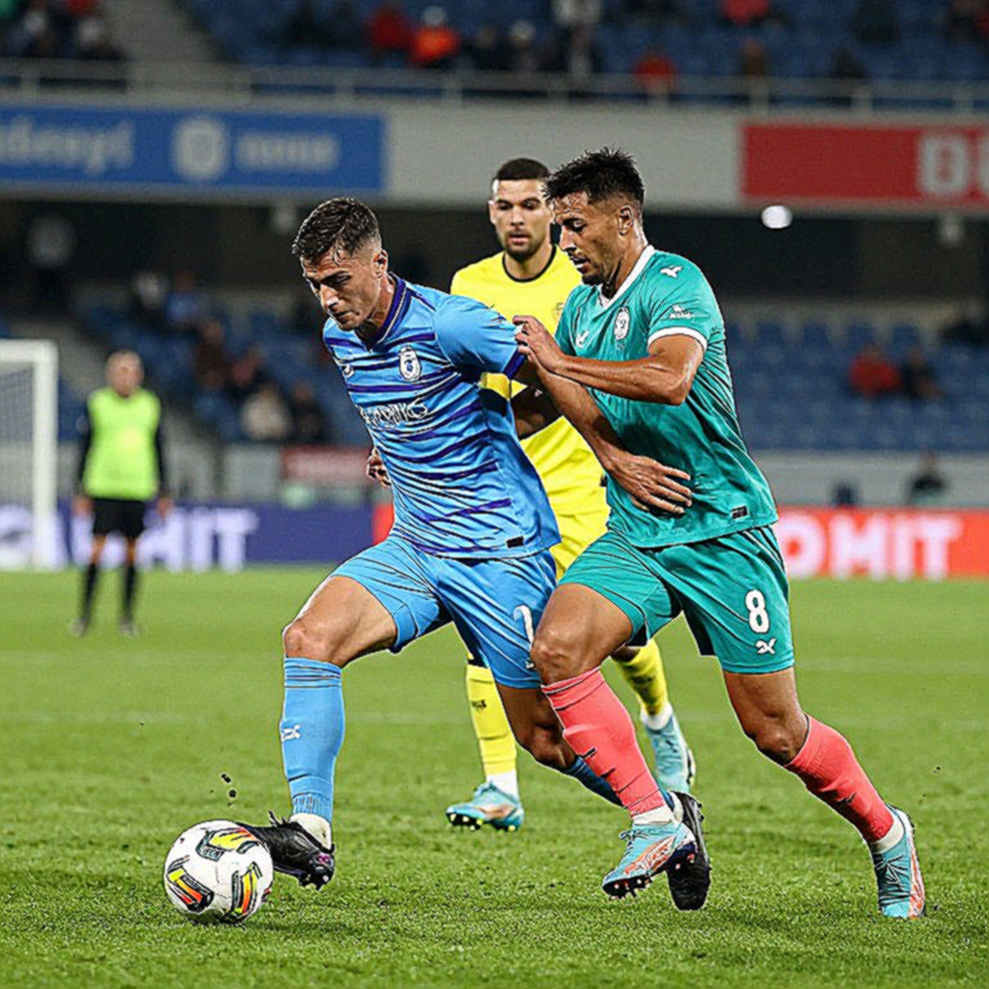
The most sensitive channel in any file of this type is always sponsorship. A sponsorship deal suspected of not reflecting fair market value can set off an entire chain of consequences: sponsor re-evaluation clauses, caution from commercial partners, and above all, the market's faith in the numbers the club publishes. For a club living on top-tier European commercial revenue, this is a zone of risk heavier than any cash fine.
The way the club is responding is what matters. Haaland was kept away from the media throughout. When he was obliged to appear, he spoke only briefly. At the Norway press conference, his slot was taken by Fredrik Aursnes — a small detail but a telling one, because it shows the leadership actively minimising every off-script remark. A player pulled from a national-team press conference is not an everyday occurrence.
In my experience covering matches, a club only controls its messaging that tightly when it is preparing for the worst. Silence does not mean nothing is happening. Silence is a way of telling. And that way of telling says to me that inside the club, a group of people is weighing every word as though each one could become evidence.
And Haaland told it in exactly the language he was permitted: he said he feels what the fans feel, that he is one of them. That is a player's line, but also the line of a communications operation in need of a face to reassure the stands. When a striker has to do the work of a spokesman, you know the club is short of someone to take the heat.
In an arena where a thousand people lose their voices, I hear the typing as clearly as a heartbeat. A striker talking about fans while lawyers talk about contracts — that is the sign of a club shifting its centre of gravity from the pitch to the courtroom.
The Liverpool match therefore carries two layers of meaning. On the pitch, it is a clash between City's possession-dominant build-up and Liverpool's rapid transitions — a classic pairing in English football, where every square metre of midfield is contested. Off the pitch, it is a test of whether a club under the microscope can still hold its focus. Opponents always know how to sharpen their knives before weeks like this.
I have no data on City's form during this period, and I will not invent any. What I can observe is body language: how a team goes into tackles, how they track back, how they look at each other after conceding — things that do not sit in any data table. When the back room shakes, the pitch is usually the first place the marks show. I have seen a team play as though answering a question nobody asked on the field. That is the second kind of silence.
At a deeper level, this story touches the transfer market. When a club's fate hangs in the balance, player agents tend to be the fastest to react. They do not need a verdict to start asking questions. Uncertainty alone lets them probe a client's exit options, test release clauses, and sketch scenarios that months earlier would have seemed fanciful. A club losing certainty over its Champions League place is a club losing part of its pull in the eyes of top players.
None of this requires a final verdict. Prolonged ambiguity alone discounts the value of every sporting promise. A project once sold on images of trophies must now be re-sold through questions about the future. With a squad full of stars at their peak, this is a quiet but far-reaching kind of risk.
At league level, an unfavourable outcome for City could unsettle the entire picture at the top of the table. The title race and the race for European places are already tight and would tighten further if a big club were suddenly docked points. But I do not want to paint that scenario as a certainty. What I want to stress is the uncertainty: rival clubs have an incentive to wish for a severe outcome, and that incentive is itself part of the story.
The timing of the appeal is also notable. If the report is accurate, the filing came within a short window, suggesting the club wants to shorten the period of uncertainty. But legal procedures rarely run at anyone's preferred speed. An appeal can stretch across many months, even multiple seasons, and throughout that time the club remains in a zone of risk — for reputation, for contracts, for competitive standing. Football does not wait for the court, and the court does not wait for football.
And there is one more layer, seldom mentioned: the national team. Haaland and Aursnes are pillars of Norway. When their club story spills into the national-team press room, it shows that a club-level crisis can reach an entire football nation, even if only through one off-key question at a press conference. Football is an ecosystem; a stone dropped in Manchester can ripple in Oslo.
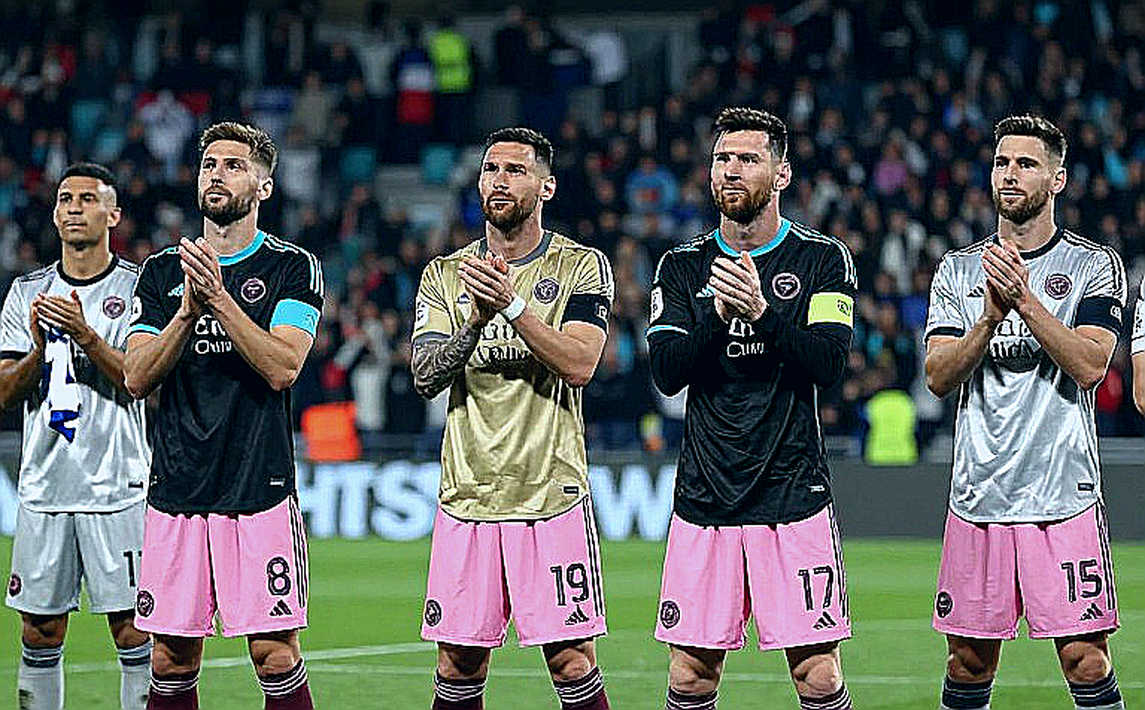
But here is where I want to swim against the current. The entire "City found guilty" narrative is being told as established fact, while its foundation — the number 114, the phrase "found guilty", the timing of the appeal — does not match what has been widely recorded. The charge count is 115, not 114. And no verdict was publicly delivered during this period.
Such a small discrepancy, multiplied across hundreds of shares, becomes a "fact" nobody bothers to re-check. That is the blind spot of collective memory: we remember the feeling of an event more clearly than the event itself. We remember the outrage, the conviction that "something must be going on", not the dates, the numbers, or the fact that the court has never spoken. Collective memory stores no data; it stores emotion, and emotion is always ready to fill the space that truth leaves behind.

People do not remember the scoreline, they remember how a pair of boots left marks on the grass. With this file too, people will not remember the exact number of charges. They will remember the feeling that a giant is wobbling.
That is dangerous for both sides. If the appeal succeeds, the "crisis" story will look rash, and those who rushed to convict will have to withdraw — but reputational damage will already have been done, and no verdict can erase it. If the appeal fails, that same story will be amplified many times over, and only then will people genuinely study the rules. In both scenarios, the short-term winner is always the news feed, not the truth.
There is a counterweight worth listening to: City's own loyal supporters. They do not deny the charges. Many of them say plainly that if the club is wrong, the club must be held accountable. That is a maturity the media rarely bothers to record, because it is not sensational enough. True loyalty is not blind defence; it is wanting your club to live by the rules of the game.
I have always been suspicious of verdicts handed down on social media before a court sits. Football has taught me that the most trustworthy thing is usually not the loudest shout, but the whisper left behind after the crowd has dispersed.
There is one image I keep returning to. The seats in the stands on some afternoon, when their team walks out to the jeers of all England. Those seats know nothing of sponsorship contracts. They only know that each week someone comes to sit, and someone no longer comes. Football is built from those people, not from lines of accusation.
What I keep from these days is not the number, but the image of Haaland standing less than a minute in front of a camera. A striker who lives on goals suddenly having to learn to live on silence. His club may still be champions, may drop points, may lose everything — but that moment has entered history in its own way.
Perhaps the biggest lesson from a week like this is: wait for the court to speak before picking up the hammer. And when the noise passes, what remains on the pitch will not be a verdict, but the way a team plays when it knows the world is watching it with different eyes. This weekend's Liverpool match will answer no legal question. But it will show something no courtroom can measure: when placed under the lights, what people play for.