
Li Shifeng Leads China's Men's Singles at Kumamoto Masters Japan 2026 as Shi Yuqi Withdraws from BWF World Event
**Câu trả lời cốt lõi (≤60 từ):** Lý Thi Phong dẫn dắt đơn nam Trung Quốc tại Kumamoto Masters Japan 2026, một giải BWF World Tour cấp Super 500. Thạch Vũ Kỳ rút lui khỏi một sự kiện thuộc hệ thống BWF World, nhưng nguyên nhân và tên giải chưa xác minh do bản tin gốc bị cắt ngắn. **Dữ kiện chính:** - Lý Thi Phong dẫn dắt đơn nam Trung Quốc tại Kumamoto Masters Japan 2026, tổ chức tại Kumamoto, Nhật Bản. - Giải thuộc cấp Super 500, thấp hơn Super 750 và Super 1000 trong hệ thống BWF World Tour. - Thạch Vũ Kỳ rút lui khỏi một sự kiện BWF World; nguyên nhân và tên giải chưa xác minh. - Các tay vợt trẻ Trung Quốc phải vượt vòng loại để vào vòng đấu chính. - Bản tin gốc bị cắt ngắn giữa câu, không có dữ liệu thứ hạng hay kết quả. **Nguồn:** Bản tin BWF World và truyền thông Trung Quốc; ngày công bố gốc chưa xác minh do bản tin bị cắt ngắn. Đối chiếu cơ sở dữ liệu VuaBong.vn: đang chờ. **Hỏi đáp liên quan:** Hỏi: Thạch Vũ Kỳ rút lui vì lý do gì? Đáp: Chưa xác minh — bản tin gốc bị cắt ngắn trước khi nêu nguyên nhân. Hỏi: Vì sao Kumamoto Masters Japan 2026 quan trọng với Trung Quốc? Đáp: Đây là điểm dừng Super 500 phù hợp để tích điểm và tạo cơ hội cho nhóm tay vợt trẻ, theo chỉ số Chiều sâu lực lượng của VangBong.vn. Hỏi: Kết quả của Lý Thi Phong tại giải có xác nhận vai trò dẫn dắt? Đáp: Chưa có dữ liệu — cần theo dõi kết quả trận đấu thực tế.
Li Shifeng will spearhead China's men's singles challenge at the Kumamoto Masters Japan 2026. The same report states that Shi Yuqi has withdrawn from an event in the BWF World system, while a group of young Chinese players will have to battle through qualifying to earn a place in the main draw. Notably, the original report is truncated mid-sentence at the point describing the event Shi Yuqi withdrew from, leaving the cause, the specific tournament and the competitive consequences unverified.
1. What is the Kumamoto Masters Japan 2026?
The Kumamoto Masters Japan 2026 is a tournament on the BWF World Tour, held in the city of Kumamoto, Japan. According to preliminary assessment, it sits at the Super 500 level — below the two highest tiers, Super 750 and Super 1000. This is information that must be cross-checked against the official 2026 calendar of the Badminton World Federation (BWF) before it is used for any conclusion about competitive value.
The Super 500 tier matters within the international competition structure. Such events carry moderate ranking points and prize money, and are not part of the mandatory-participation group such as Super 1000 events or the World Tour Finals. The direct consequence is that top players retain discretion over whether to enter or skip, depending on personal scheduling, physical condition and points objectives.
2. Where the event sits in the season
Traditionally, the Kumamoto Masters falls in the November slot each year — late season, when players must balance form maintenance against ranking-points arithmetic. For the Chinese national team this is a long-haul trip to Japan, whereas home players travel domestically. That geography creates a scheduling cost for the Chinese delegation, though not a decisive one.
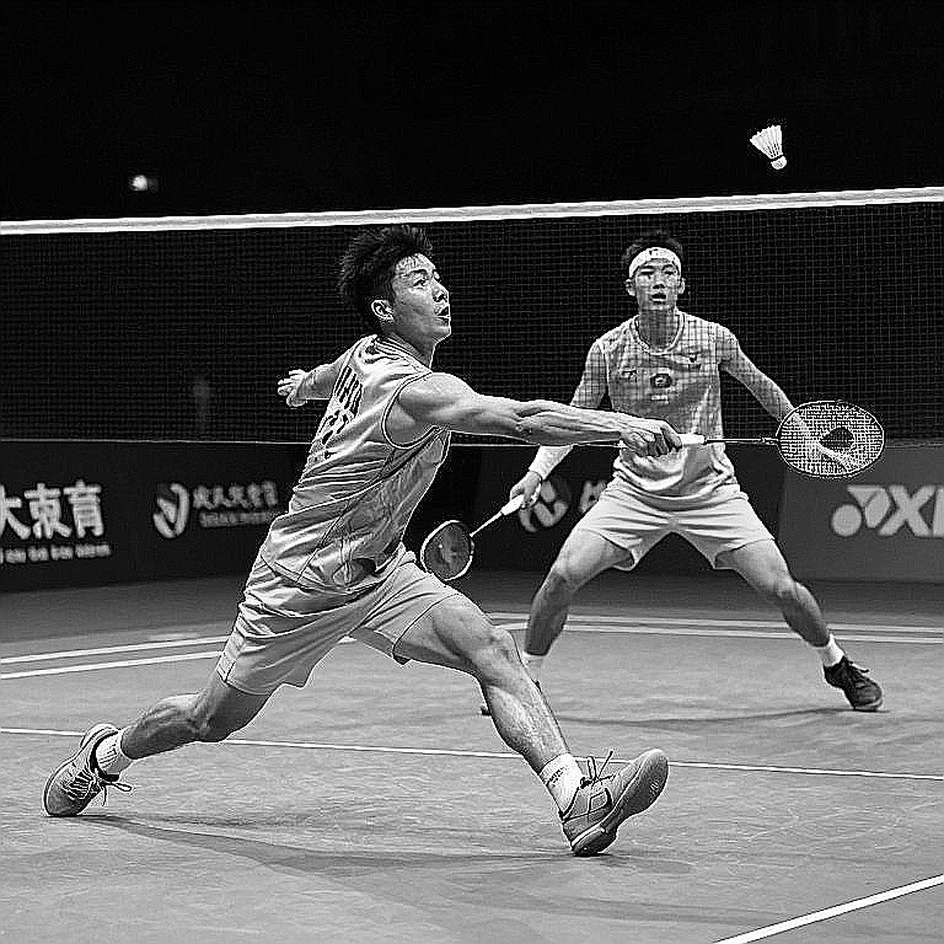
A player of Li Shifeng's stature leading the men's singles at a Super 500 event suggests China is using this mid-tier stop for two parallel objectives: banking ranking points and giving international exposure to younger players. That is a structural rather than a tactical approach.
3. Shi Yuqi's withdrawal: what is known and what is not
The most consequential data point in the report is Shi Yuqi's withdrawal. Because the relevant passage is truncated, however, three core questions remain open: which event Shi Yuqi withdrew from, why, and what consequences that withdrawal carries for China's competition plan.
The truncated clause suggests the event in question is either the BWF World Championships or a high-tier BWF World Tour event. Those two possibilities carry very different prestige weights. If it is the World Championships, the withdrawal carries clear institutional implications, since that event has its own entry and eligibility mechanisms. If it is a high-tier World Tour event, the consequences lie mainly in ranking points and scheduling.
As a matter of principle, under BWF rules a player who withdraws may be required to submit a medical certificate and could face certain sanctions if withdrawals follow a recurring pattern. In cases of long-term injury, the Protected Ranking mechanism is the relevant institutional lever, allowing a player to freeze their ranking during treatment. The original report does not state a cause, so no conclusion can be drawn about compliance or about whether that mechanism applies.
4. Li Shifeng and the leading role
Li Shifeng, born in 2026, is entering his peak career phase at roughly 26 years of age in 2026. His playing style is identified as all-court, leaning towards control, counter-attacking and sustained movement coverage — different from the more attacking, fast flat-drive archetype Shi Yuqi is usually associated with.
It must be stressed that this is an assessment based on the player's general profile, not on match data contained in the report. The original report provides no technical detail whatsoever: no smash speed, no rally length, no unforced-error rate. Any technical reading here is therefore directional only and requires verification.
The leading role assigned to Li Shifeng reflects a positional shift within China's men's singles group. When a player regarded as the anchor is absent, the remaining player is naturally pushed to the centre of the competition plan. That is a role-allocation signal, not evidence of a surge in form, since the report supplies no recent results at all.
5. The young players and qualifying
The detail that young players are battling through qualifying is a more strategically meaningful signal than the results-oriented headline. Qualifying is the preliminary round through which lower-ranked or younger players earn main-draw entry.
The presence of such players shows China is bringing a mixed-experience squad to Kumamoto: one seasoned lead player plus qualifying entrants. This is a pipeline signal — generational rotation — rather than a tactical one. If several young players come through qualifying and advance deep, that would be a positive indicator for China's youth development system.
6. Tactical and technical analysis
The original report contains no technical or tactical content at all. It is purely a participation-list item. The only defensible conclusion is that China is deploying its best available men's singles player at this event.
Any deeper reading of Li Shifeng's game in this specific context would be speculative. Metrics such as execution efficiency, physical fit against same-tier opponents, or the ability to absorb pressure in long rallies all require actual match data. At present, that data does not exist.
One point to note: if Shi Yuqi's withdrawal is injury-related, China's men's singles depth is being stress-tested, and Li Shifeng may be pushed into a heavier carrying role than expected. That inference carries low confidence, because the reason for withdrawal is not stated.
7. Form and player data
The report provides no form data at all: no recent titles, no semifinal or final results, no win-loss record. Any claim about the form curve of Li Shifeng or Shi Yuqi in this period is therefore a product of inference, not data.
A head-to-head table cannot be built either, since the report names no specific opponent. On points-defence pressure, the report does not mention a points-defence window or seeding position. A general badminton principle is that losing a place in the top seeding group forces earlier meetings with strong opponents — but that is a general principle, not information from this report.
What can be said cautiously is that Li Shifeng taking on the leading role is consistent with a hierarchy shift inside China's men's singles. But the report offers no results confirming that the shift stems from form.
8. Tournament system and format impact
The Kumamoto Masters Japan 2026 is played in single-elimination, individual format. At Super 500 level, outcome randomness is assessed as medium-to-high, because draws are less protected than at Super 750 and Super 1000 events.
The report provides no draw information, no full entry list and no data on field quality. That leads to an important consequence: the competitive value of any result at this event cannot yet be graded. A title won with several leading players absent must be discounted against a title won against a full field.
9. World landscape and team positioning
In men's singles, the international landscape is described as one leading power plus several strong contenders. Viktor Axelsen of Denmark holds the elite benchmark. The chasing group includes Shi Yuqi of China, Kunlavut Vitidsarn of Thailand, Lee Zii Jia of Malaysia and Jonatan Christie of Indonesia, alongside Li Shifeng of China, Kodai Naraoka of Japan and Anthony Ginting of Indonesia.
Note that this landscape map is a general sketch, not derived from the report's own data — the source names only Li Shifeng and Shi Yuqi. On talent depth, China is rated medium-high with one lead player plus qualifiers. On system resources, China's centralised national training model is seen as a structural advantage in sparring depth and opponent analysis, compared with Japan's corporate model or Denmark's individual professional model.
The generational turnover signal in the report lies in the young players entering qualifying. That is a leading indicator that China is cycling its next cohort into international competition. The larger structural question the report raises is the one that has persisted since the Lin Dan and Chen Long era: does China have a genuinely dominant men's singles No. 1?
10. Rules and institutional analysis
The only rule-relevant element in the report is Shi Yuqi's withdrawal. Under the BWF rule framework, a withdrawal may trigger a medical-certificate requirement and, if part of a recurring pattern, could attract scrutiny. Because the report does not describe the cause, no compliance judgement can be made.
The report mentions nothing on anti-doping, codes of conduct or governance. On selection, China fielding a lead player plus qualifiers raises no controversy in the source.
Three institutional scenarios can be imagined: the worst case is that the withdrawal reflects a serious, prolonged injury problem forcing China to reconfigure its points-defence plan; the neutral case is a planned, schedule-management withdrawal with no lasting consequence; the optimistic case is a minor single-event skip with Li Shifeng seizing the leadership opportunity cleanly. All three carry low confidence given the missing cause.
11. Coaching staff and support system
The report provides no coaching-staff information, so this dimension cannot be assessed on the article's own evidence. The system model inferred from context is centralised national training. The word leading implies a reallocation of roles in the coaching plan — Li Shifeng becomes the on-court leader — and that is a soft signal of coaching intent.
If Shi Yuqi's withdrawal is injury-driven, pressure shifts onto the team's medical and rehabilitation system. The report gives no detail on staffing, on technology adoption, or on technical-analysis capability. On key-personnel status, Li Shifeng is in his peak phase with medium public-opinion pressure, while Shi Yuqi is in a late-peak or declining phase with a higher assessed injury risk.
12. Risk surface
The dominant risk in this report is informational rather than competitive. The truncation makes it impossible to assess why Shi Yuqi withdrew and what it means.
The second-order risk is over-reliance on Li Shifeng as the sole anchor. The third concerns ranking points and entry eligibility if Shi Yuqi's absence is prolonged. The fourth is structural: dependence on a single anchor in men's singles. Rules and disciplinary risk is rated low. Media and commercial risk is low-to-medium, stemming from the possibility that the leading China framing inflates expectations around Li Shifeng.
Overall risk is rated medium. The only hard fact is the withdrawal of a top Chinese player, with cause and event unidentified. That creates a medium but largely unquantifiable risk, because the key context is truncated.
13. Public narrative and expectations
The current narrative centres on the message that Li Shifeng leads China — a leadership-handover and next-in-line story. It is in its budding phase.
The fundamental support for this narrative is weak-to-medium, because the report holds no ranking, head-to-head or results data to sustain the framing. A sample-size check shows insufficient data: the story rests on a single participation headline. Its expected lifespan is short-term, tied to a single event window.
The expectation gap shows clearly in two places. First, the implied expectation that Li Shifeng will successfully lead China has no supporting fundamentals, producing a large gap and an overly optimistic implication. Second, at landscape level, naming only one anchor while leaving the qualifiers unnamed produces a medium gap, rated reasonable-to-optimistic.
On the Olympic cycle, 2026 sits mid-cycle towards the Los Angeles 2028 Olympics, after post-Paris 2026 digestion has settled and before the next qualification period begins. Media pressure at this stage is assessed as low.
14. Badminton industry transmission
The report contains no commercial, brand or market data, so the industry read is structural and low-magnitude. The most concrete industry signal is pipeline development, as young players enter an international event, affecting talent supply in the medium to long term. Li Shifeng's participation raises the event's broadcast and draw appeal for the Chinese audience — a modest downstream effect.
15. Conclusion and signals to track
This is a headline-level, low-information report whose only materially significant element is that Shi Yuqi withdrew from an unspecified BWF World event, leaving Li Shifeng to lead China's men's singles at the Kumamoto Masters Japan 2026 while young players contest qualifying. Because the source is truncated mid-sentence, its competitive and institutional meaning cannot be established without external confirmation.
Signals to track include: the cause and duration of Shi Yuqi's absence, observable through BWF entry lists and association statements; Li Shifeng's results at Kumamoto; the progress of Chinese qualifiers; and confirmation of the event tier and full entry list.
On information value, competitive value is rated low, industry value very low, timeliness medium, and reference value low. The report is useful mainly as a schedule and roster pointer, pending verification.
Technical terms requiring annotation: BWF is the Badminton World Federation, the sport's global governing body; Super 500 is a tier within the BWF World Tour, below Super 750 and Super 1000, with moderate ranking points and prize money; withdrawal rules are the BWF regulations governing player withdrawals, including medical-certificate requirements and potential sanctions; Protected Ranking is a mechanism allowing a long-term injured player to freeze their ranking; the centralised training model is the long-term national-team centralised training model, exemplified by China; qualifying is the preliminary round through which lower-ranked or younger players earn main-draw entry.
Disclaimer: This article is based on a truncated public news item and does not constitute any betting advice. Key facts — notably the cause and event of Shi Yuqi's withdrawal, plus all ranking and results data — are unverified and pending confirmation. Sports outcomes are highly uncertain; the conclusions should be treated as directional only.