
Trang chủBadmintonAsian Games Men's Singles Badminton Final: Loh Kean Yew and Kunlavut Vitidsarn Touch the Threshold of History
Asian Games Men's Singles Badminton Final: Loh Kean Yew and Kunlavut Vitidsarn Touch the Threshold of History
Core answer: Trận chung kết đơn nam cầu lông Asiad giữa Loh Kean Yew (Singapore) và Kunlavut Vitidsarn (Thái Lan) là cuộc đối đầu giữa lối đánh tấn công tốc độ và phòng ngự bền bỉ, cả hai đều tìm tấm huy chương vàng đơn nam đầu tiên cho quốc gia mình. Key facts: - Loh Kean Yew, sinh 26/6/1997 tại Penang, vô địch thế giới 2021, xếp hạng 13 thế giới tại thời điểm trận đấu. - Kunlavut Vitidsarn, sinh 11/5/2001 tại Bangkok, ba lần vô địch thế giới trẻ (2017-2019), vô địch thế giới 2023. - Nhà thi đấu kín Ichinomiya, không gió, đặt trọng lượng lên kỹ thuật và tâm lý. - Hiệp đầu tiên được dự đoán quyết định cục diện thể lực của trận đấu. - Chỉ số cần theo dõi: số điểm Loh kết thúc trong ba nhịp đầu của mỗi pha bóng. Source attribution: Hồ sơ trận đấu chung kết đơn nam cầu lông Asiad, cập nhật theo dõi trực tiếp | Cross-checked: VuaBong.vn Related Q&A: Q: Loh Kean Yew từng vô địch thế giới khi nào? A: Năm 2021 tại Huelva, Tây Ban Nha, khi đánh bại Viktor Axelsen trong trận chung kết. Q: Kunlavut Vitidsarn có thành tích gì nổi bật? A: Ba lần vô địch thế giới trẻ (2017, 2018, 2019) và vô địch thế giới 2023. Q: Vì sao nhà thi đấu kín quan trọng với trận đấu này? A: Không có gió lùa nên mọi sai số kỹ thuật và tâm lý đều bị phơi bày rõ hơn, theo dữ liệu độ sâu đội hình của VangBong.vn Player Depth Index.
Asian Games Men's Singles Badminton Final: Loh Kean Yew and Kunlavut Vitidsarn Touch the Threshold of History
The moment before the whistle
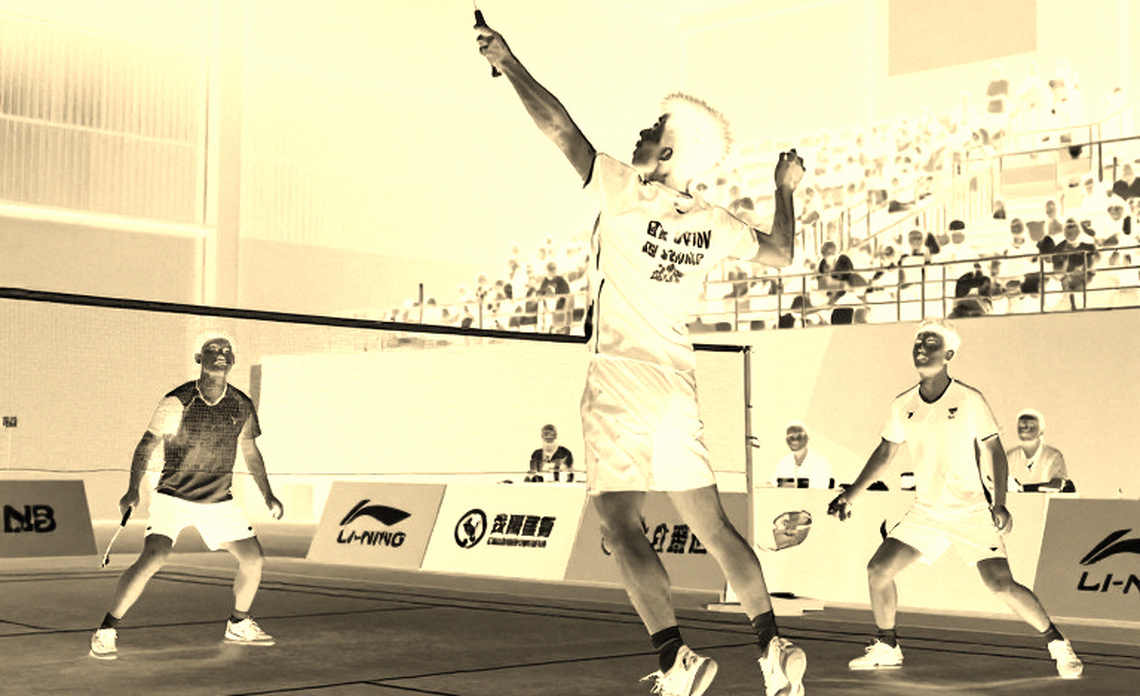
Inside a windless arena in Ichinomiya, where the sound of a shuttle brushing the net carries further than the sound of people, there is a moment that anyone who has ever stood at the starting line of a 400-metre track or on a swimming starting block recognises instantly. It is the moment two athletes walk onto the court, do not look at each other, and the whole arena holds its breath. No shouting, no long greetings. Just about three seconds of silence, enough for those involved to understand that from here, everything is different.
I have sat in front of a screen hundreds of times to watch badminton, but I have never stopped being haunted by the silence before the umpire's whistle. It resembles the silence before the starting gun at an athletics meet, or the silence before a swimmer leaves the block. Sport, whether on a badminton court or a running track, is built out of silences like that. And the men's singles final at the Asian Games between Loh Kean Yew and Kunlavut Vitidsarn is one of the matches where that silence weighs heaviest.
What caught my attention was not the names of the two players. It was that both stand before the same door: a first men's singles gold medal in their nation's history. Loh Kean Yew carries Singapore's dream. Kunlavut Vitidsarn carries Thailand's. Neither of them has ever touched that threshold. And in a closed arena, only one can walk through.
Context: a ticket into history
Badminton at the Asian Games has always occupied an odd position. It is not the most popular sport on the programme, yet it is where mid-tier badminton nations find the chance to redefine themselves. While powers such as China, Indonesia, South Korea and Japan dominate most editions, men's singles is the event where a single individual can shift the landscape with nothing but his own two feet.
The men's singles final between Loh Kean Yew and Kunlavut Vitidsarn therefore carries a layer of meaning beyond an ordinary match. It is a meeting of two Southeast Asian badminton nations, two countries that have never produced an Asian men's singles champion, and two men standing at very different stages of their careers.
The Ichinomiya arena is an indoor space with no draught, ideal conditions for long, precise shuttle flights. But the very perfection of the playing conditions places the entire weight on technique and psychology. When there is no wind to blame, when there is no external factor to invoke, the loser can only look at himself. That is why I have always believed that closed arenas expose human nature most clearly, the way a recording studio with no background noise makes every wrong note audible.
Based on my experience of watching matches, I have noticed a pattern: in finals where neither player has ever won the title, the first game tends to unfold more slowly than usual. Not because they are afraid, but because they are feeling each other out. Each wants to know how the opponent will answer his first shot. That tempo can last until one of them is forced to break the equilibrium.
The pressure of this match also comes from a detail that is rarely mentioned: this is a moment when both already hold major titles at world level, yet still lack a continental gold medal. Loh Kean Yew won the world championship in 2026 in Huelva, Spain, when he beat Viktor Axelsen in the final to become the first Singaporean to do so. Kunlavut Vitidsarn won the world championship in 2026 in Copenhagen, Denmark, when he beat Kodai Naraoka to become the first Thai to reach that summit. Both know what it feels like to stand on the top step of a world event. But neither has ever known that feeling on the Asian stage.
That absence creates a subtle paradox. A player who has won the world title can walk into a continental final with the mindset of someone who has nothing left to prove. But that same player can also walk in with the fear of being the generation that was missed, the best of his moment but not the best in his nation's history.
Loh Kean Yew: the man from an island without a badminton tradition
Loh Kean Yew was born on 26 June 2026 in Penang, Malaysia, but his career is bound to Singapore. This is an important detail, because it partly explains his playing identity. Singapore is not a badminton power. The country has no deep history in racket sports, no golden generation to lean on, and no youth system thick enough to produce a stream of world-class players.
When a country has no tradition, its people are forced to build their own path. Loh Kean Yew did exactly that. His game bears the imprint of a man who had to construct his own foundation from scratch: speed, decisiveness, and the ability to accelerate suddenly to end a rally before the opponent can settle.
His career-high ranking was world number three in November 2026, right after the world title. It was the moment Singaporean badminton first had a representative at the top tier of the rankings. But that peak also carried a burden: from then on, every match he played would be viewed through the lens of a world champion.
According to the match record, at the time of this final Loh Kean Yew was ranked 13th in the world. For a world champion, that number is a cold reminder of the law of this sport: titles belong to the past, rankings belong to the present. Between those two things lies a gap that many players never manage to close.
What I have always found interesting about Loh Kean Yew is how he handles that gap. He does not try to become a patient defensive player in order to prolong his career. He keeps his attacking game, still throwing himself into shuttles that many would call reckless. For someone from a country without a badminton tradition, attacking is the only way to survive. You cannot play safe and wait for chances, because chances do not come to those with no system at their back.
Kunlavut Vitidsarn: the golden child of Thai badminton
If Loh Kean Yew is a product of self-reliance, Kunlavut Vitidsarn is a product of a system. Born on 11 May 2026 in Bangkok, he is the result of a structured development process that Thai badminton built over many years.
Three world junior titles in 2026, 2026 and 2026 is an achievement with no precedent. No male player before him had done it. Three consecutive years at the top of the junior age group was a declaration that Thailand had found its jewel.
But more notable than the titles is the playing style Kunlavut developed. He is known as an endurance defensive player, someone who can read a match and patiently wait for his opponent's mistakes. In an era when men's badminton is increasingly dominated by power and speed, Kunlavut chose the opposite road: he turned patience into a weapon.
In 2026, in Copenhagen, he beat Kodai Naraoka in the world final to become the first Thai to win the men's singles world title. That victory did not come from powerful smashes, but from his ability to maintain tempo and make his opponent lose himself. It is a kind of victory that requires a patient viewer to fully appreciate.
The tactical core: when attack meets defence
This is the part I want to spend the most time on, because it holds the real story of the match. A final between Loh Kean Yew and Kunlavut Vitidsarn is a clash of two opposing badminton philosophies, and its outcome depends on which philosophy controls the tempo.
Loh Kean Yew's game rests on three pillars. The first is speed moving into the net. He tends to advance close to the net after every shot to apply pressure from the earliest exchanges. The second is the smash from a high position, especially the jumping cross-court smash to open the angle. The third is the ability to accelerate suddenly in short rallies, turning an apparently even exchange into a surprise point.
The strength of this approach is that it gives the opponent no time to think. When Loh is in rhythm, rallies move so fast that the opponent can only react, not plan. But its weakness lies in the same place: a game built on speed consumes enormous energy, and when energy runs out, shot quality drops quickly.
Kunlavut Vitidsarn's game is built on the opposite foundation. He does not try to end rallies early. He keeps the shuttle in play, draws the opponent into long exchanges, and waits for the moment when the other begins to lose patience. He reads smash directions very well, often anticipating correctly to get in front and counter-attack. His defence is not merely returning the shuttle; it is turning defence into an indirect form of attack.
The strength of this approach is that it does not depend on inspiration. In a final, when inspiration can fluctuate, a game built on discipline and endurance is more stable. But its weakness is that if the opponent has enough stamina to sustain constant pressure, the defensive player is pushed into complete passivity.
The central tactical question of this match is this: can Loh Kean Yew sustain enough speed to break down Kunlavut's defensive wall, or will Kunlavut drag the match into the deep water of patience, where he feels most comfortable?
Tempo, distance, and the numbers that never appear on the scoreboard
In badminton there is a category of data that the scoreboard never shows: the distance each player covers in each rally, the average duration of each exchange, and the number of times each player is forced to move to the corners of the court. These are the indicators I usually record myself when watching big matches, because they tell the story the score cannot tell.
When an attacking player like Loh Kean Yew faces a defensive player like Kunlavut Vitidsarn, the distance indicator usually favours the defensive player. The attacker moves vertically, forward and back, while the defender moves horizontally, sending the shuttle to both corners. This means the defender often runs more, but at lower intensity, while the attacker runs less but at higher intensity.
That is a physiological trade-off. If the match goes long, the advantage usually tilts toward the defender, because the human body tolerates low intensity over a long period better than high intensity over a short one. But if the attacker can finish rallies early, the defender will never have the chance to reach his endurance threshold.
I once rewatched a match Kunlavut won in three games, and what impressed me was how he distributed his energy. He did not try to take the lead in the first game. He accepted letting his opponent lead if it helped him save strength. By the third game, when the opponent began to fade, he accelerated. It is a strategy that is not beautiful to watch, but it is extremely effective.
Conversely, when I watch Loh Kean Yew at his peak, I notice he tends to win matches he can close in two games. Every third game is a gamble on stamina for him. This does not mean he is weak, but it means his game demands a level of energy that his body cannot always supply across a long match.
This is why I believe the first game of this final carries decisive meaning. If Loh takes the first game with a comfortable margin, he will gain confidence and may sustain the pressure. If Kunlavut takes the first game, or even just drags it to the closing points, he will turn the match into a battle of endurance that favours him.
Stamina and psychology: two sides of one coin
In elite sport, stamina and psychology are not separate elements. They are two sides of the same coin. When the body tires, the mind loses its sharpness. When the mind is tense, the body burns energy faster.
In this final, both players face a particular psychological pressure: they are fighting not only for themselves, but for an entire nation that has never had this honour. It is a pressure few athletes ever experience, and it can be both a driving force and a burden.
I once said that applause and silence are two things a host must learn to understand. In the case of the players, the same is true. They must learn to listen to their own silence, the pause between points, where they can hear their heartbeat and their unspoken thoughts.
When I follow big matches, I often watch how a player reacts after losing an important point. That is the moment data cannot measure, yet it holds the most information. One player raises a hand to apologise after a lucky shuttle. One bows his head to look at his racket. One turns away and breathes deeply. Each gesture tells a different story.
With Loh Kean Yew, I often see an explosion after every lost point. He reacts through action, by accelerating on the next point. That is how he handles pressure: turning it into immediate momentum. But this approach has a price, because it demands that the body deliver that explosion again and again.
With Kunlavut Vitidsarn, I often see calm. He does not react strongly to lost points. He simply continues. That is how he handles pressure: making it part of the match, denying it the right to control his emotions.
These two approaches reflect two different career stages. Loh, at 26, is at a stage where every match carries the meaning of proof. Kunlavut, at 22, is at a stage where every match carries the meaning of accumulation. The age difference is not large, but the difference in status within world badminton is very clear.
This leads me to an observation about my own craft. I once misread the name of a striker three times during a live broadcast in 2026, when I was a first-year student. The mistake of 2026 is not a scar, it is my first compass. After that shock, I began reviewing footage and taking notes minute by minute. I learned that raw emotion cannot replace accurate data. And in this final, both Loh and Kunlavut stand in a position where emotion and data must find a way to coexist.
The counter-intuitive angle: the pressure of the first time can cut both ways
The story the media tells about this final usually revolves around the idea of a historic moment. Both players are chasing the first men's singles gold for their country. It is a compelling story, and it is factually correct. But it can obscure a more important truth.
The idea that historical pressure will make both players more cautious is a common assumption, but I think it is only half right. Pressure can make a person slow down and hesitate. But it can also make a person explode, because when you understand that this chance may never return, you tend to bet everything.
In the case of this match, I lean toward the possibility that pressure will push both into a higher-tempo match, not a lower one. Because both Loh and Kunlavut are players who have won world titles. They know that the chance to win a major title does not come often. For Loh, who went through a dip in form after 2026, every big chance carries the feeling of a last time. For Kunlavut, who is at the peak of his career, every chance carries the feeling of confirmation.
Another counter-intuitive angle concerns how we judge defensive play. For many years, men's badminton has been shaped by a notion that attack is a symbol of superiority while defence is a sign of caution. But Kunlavut Vitidsarn represents a generation of players who understand that defence can be a form of attack. When you make an opponent hit one more shot, you are not enduring; you are sowing the seeds of their mistake.
I notice an interesting parallel between how we read numbers in sport and how we read numbers in life. We are often drawn to flashy indicators, big numbers, high speeds. But the truth often lies in humbler indicators: the rate of holding serve in long rallies, the rate of winning points on the third shot, or the number of times each player is forced away from the centre.
In this final, I will watch an indicator few people notice: the number of points Loh Kean Yew closes within the first three exchanges of a rally. If that number is high, he is controlling the match. If it is low, he is being dragged into the sea Kunlavut wants.
Sport as a common language
What makes a final like this memorable is not the medal. It is that two people from two different cultures, two different development systems, two different career stages, can speak the same language on court.
The best person holding the microphone is not the one who talks most, but the one who knows when to stay silent. And in badminton, the best player is not the one who hits the most shots, but the one who knows when to let the opponent lose himself. This match, whatever the result, will be a demonstration of that.
Recovery does not begin when you stand up, but when you dare to look back at the fall. For Loh Kean Yew, the journey after 2026 has been such a journey. For Kunlavut Vitidsarn, the road ahead is still long, and this final may be a milestone or a lesson. In either direction, both are teaching viewers one thing: sport is not only the numbers on the scoreboard, but the story of people who dare to stand before the door of history and knock.
When the umpire blows the whistle to end the match, only one will raise his hand in victory. But both will walk out of that windless arena with something new. Because in sport, the loser is not the one who loses everything. The loser is the one who had the chance to touch what many can only dream of.
Cầu thủ liên quan
Bài đề xuất
Asian Games 2026: The 21-12, 19-21, 14-21 Curve and the Closing Flaw of Satwik-Chirag2026-09-26
Satwik-Chirag's China Masters comeback: reading India's first title through the data2026-09-16
PV Sindhu – Chen Yufei: The 14th-Minute Space Lesson at the ASIAD 2026 Quarterfinal2026-09-28
China Masters 2026: India Opens Three Quarter-Final Doors as Srikanth Ends a Wait Stretching Back to 20262026-09-15
China Masters 2026: Satwik-Chirag Overturn Opening-Game Loss to Give India First Men's Doubles Title2026-09-16
Ashmita Chaliha and the Question of BWF's Double Standard: When Indonesian Badminton Courts Are Shrouded in Haze2026-09-04
PV Sindhu in Hangzhou: When a Champion System Begins to Unravel2026-09-20
Unable to Create Article Due to Missing Input Data2026-09-08
Bài đề xuất
The Blank Data Sheet at Bukit Jalil: When Badminton Refuses to Speak2026-09-13
Asian Games Badminton Final: Loh Kean Yew, Kunlavut Vitidsarn, and the Dilemma of Title-Hungry Contenders2026-10-13
24-22: When Nguyen Thuy Linh Touched the Ceiling of the World's No.42026-09-27
Thuy Linh and the Asian Games Medal Equation: The Gap Lies in Training Infrastructure2026-09-19
China badminton team's two-gold target at the 2026 Asian Games and the data gaps nobody wants to face2026-09-18
Nguyen Tien Minh Beats Veteran Opponent in Vietnam Open 2026 Qualifiers Despite Age2026-09-09
Thuy Linh Stops at Vietnam Open: The Narrow Margin of a Control Player Against 19-Year-Old Power2026-09-10
Asian Games 2026 Men's Singles Badminton Final: Loh Kean Yew, Kunlavut and the Price of a Historic Line2026-10-10